Dental Assistant Program in Seattle, WA: Curriculum, Cost, and What to Expect
Not every dental assistant program produces the same results. The difference between a program that gets you hired and one that leaves you struggling shows up in three places: where you train, what you practice, and whether certification prep is built in or bolted on.
Here’s how to evaluate a dental assistant program in Seattle — and what the program at Seattle Dental Assistant School specifically includes.
What a Quality Dental Assistant Program Covers
The U.S. Department of Labor’s O*NET database breaks dental assisting into five core competency areas. A complete program addresses all of them:
1. Clinical Procedures
This is the largest skill area and the one employers care most about:
- Chairside assisting: Instrument passing, suction management, retraction technique, four-handed dentistry coordination. You’ll assist during fillings, crowns, extractions, root canals, and preventive procedures.
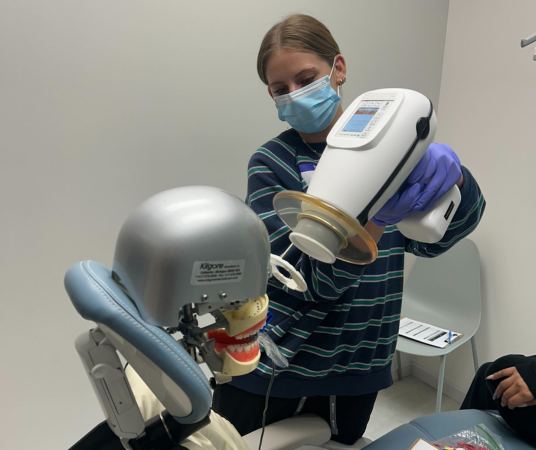
- Dental radiography: Patient positioning, sensor placement, exposure technique, radiation safety, digital system operation, and image quality evaluation. Most offices take X-rays on nearly every patient — this skill is used dozens of times per day.
- Dental materials: Mixing and handling impression materials (alginate, PVS), cements (glass ionomer, zinc phosphate, resin-modified), composites, bonding agents, and temporary restoration materials. Precise technique matters — wrong mixing ratios or handling times ruin the material.
- Sterilization and infection control: Instrument processing (ultrasonic cleaning, packaging, autoclaving), biological monitoring, operatory disinfection, OSHA compliance, PPE protocols, and sharps disposal.
2. Patient Interaction
O*NET ranks “Service Orientation” and “Social Perceptiveness” among the top work styles for dental assistants. Training should cover:
- Patient intake and medical history review
- Managing dental anxiety (especially in children and phobic adults)
- Explaining procedures in plain language
- Delivering pre-operative and post-operative instructions
- Professional communication under pressure
3. Administrative Operations
- Appointment scheduling and calendar management
- Dental charting and records maintenance
- Insurance verification and claims processing
- Supply inventory and ordering
- Practice management software (Dentrix, Eaglesoft, Open Dental)
4. Technology Skills
Modern dental offices run on technology. O*NET lists specific technology competencies for dental assistants:
- Digital radiography systems
- Electronic health records and practice management software
- Intraoral cameras and digital impression systems
- Sterilization monitoring systems
- Patient communication platforms
5. Regulatory Knowledge
- OSHA bloodborne pathogen standards
- HIPAA patient privacy requirements
- State dental practice act provisions
- Infection control guidelines (CDC, ADA)
- Radiation safety regulations
Program Structure at Seattle Dental Assistant School
Length: 12 weeks Schedule: Evenings and weekends Training location: Inside real dental offices Certification prep: RDA exam content integrated throughout Externship: Supervised clinical experience in a local practice Credentials earned: Certificate of completion, BLS certification (American Heart Association), RDA exam eligibility
Why Real Dental Offices Matter
Some programs teach in classroom buildings using plastic models and textbook diagrams. Seattle Dental Assistant School holds classes inside working dental practices. The difference is significant:
- You train on the same equipment you’ll use on the job
- You observe real patient flow and office dynamics from day one
- You handle actual dental instruments, not replicas
- You practice sterilization with real autoclaves and chemical indicators
- The environment builds clinical instincts that classrooms can’t replicate
Cost and Payment
Dental assistant program costs vary widely:
| Program Type | Typical Cost | Duration |
|---|---|---|
| Focused vocational (like Seattle Dental Assistant School) | $2,000–$5,000 | 10–12 weeks |
| Community college certificate | $5,000–$15,000 | 9–12 months |
| Associate degree | $10,000–$25,000+ | 18–24 months |
Seattle Dental Assistant School offers payment plans with no student loans. You graduate debt-free and keep every dollar of your first paycheck.
WIOA funding: Many of our programs are approved under the Workforce Innovation and Opportunity Act. Eligible students may qualify for workforce-funded training. Visit CareerOneStop.org to check eligibility through your local American Job Center.
How This Program Compares
| Feature | Seattle Dental Assistant School | Community College | Online-Only |
|---|---|---|---|
| Training in real dental offices | ✅ | ❌ (campus labs) | ❌ |
| Externship included | ✅ | Usually | Rarely |
| RDA exam prep integrated | ✅ | Varies | Varies |
| Evening/weekend schedule | ✅ | Rarely | ✅ |
| No student loans | ✅ | Often required | Varies |
| Time to completion | 12 weeks | 9–24 months | Varies |
Career Outcomes
Bureau of Labor Statistics data for dental assistants:
- Median salary: $46,540/year
- Job growth: 7% through 2033 (Bright Outlook occupation per O*NET)
- Entry-level: $33,000–$40,000
- Certified/experienced: $48,000–$58,000+
The RDA certification premium alone — $2,000–$6,000/year — covers the cost of tuition within months of starting work.
Get Started
- See the full curriculum: Program details
- Review tuition and payment options: Tuition
- Talk to our team: Contact us
- Apply today: How to apply
You're 12 weeks from the dental assistant career you deserve.